

Vitamin C in a Pool: A Quick Fix for Clear Water or a Technical Mistake?
Vitamin C clears the water instantly, but at what cost? Learn about the risks of chlorine neutralisation and liner corrosion, and the truth about treating metals.
Using vitamin C in a pool (ascorbic acid) is a method of visually removing metals through chemical reduction, not extraction. Although it clears the water instantly, the process neutralises chlorine, aggressively upsets the pH balance and can cause corrosion. It is an emergency fix, not a maintenance treatment.
Pool owners often see their water take on reddish or green tints right after filling, especially when using well water. Recently, adding vitamin C to a pool (in the form of ascorbic acid) has become a hotly debated topic, promoted as a quick way to restore water clarity.
Although the visual effect is fast, turning cloudy water clear within minutes, ascorbic acid is not a sanitising product, but a reducing agent that reacts selectively with metal oxides.
How vitamin C works in a pool
Water discolouration is caused by the oxidation of dissolved metals. Oxidised iron (the ferric form, Fe3+) and oxidised manganese are insoluble and precipitate, giving the water a "rust" tint. This process is often linked to green pool water problems, where metals can mimic the appearance of algae.
The chemical reduction reaction of vitamin C in a pool
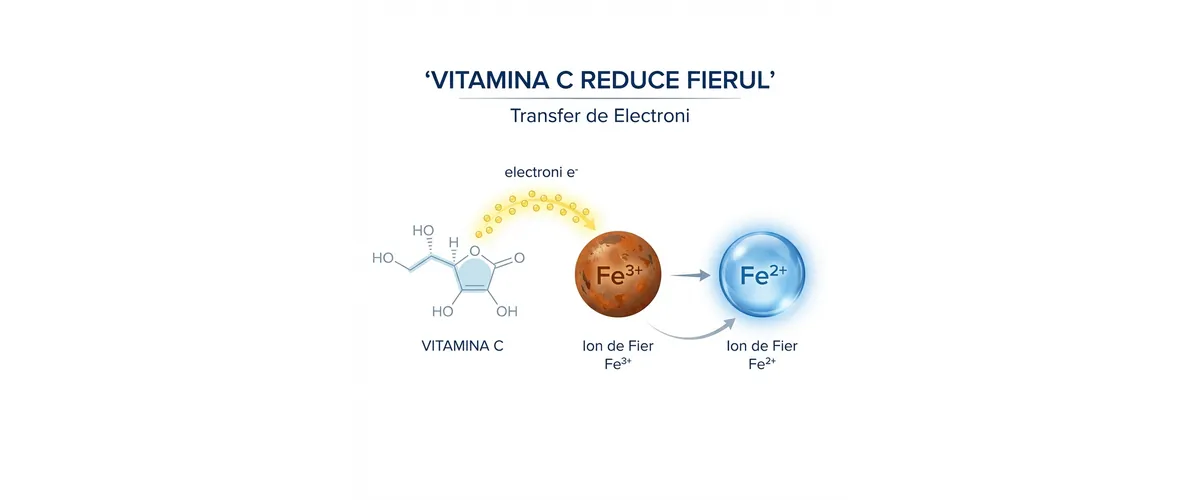
- The redox process: Ascorbic acid donates electrons to the oxidised metal ions.
- The colourless form: Insoluble iron (Fe3+) is reduced to the soluble ferrous form (Fe2+), which is colourless.
- Critical limitation: Vitamin C does not remove metals, it only "bleaches" them by changing their oxidation state.
Unlike professional water treatment products, ascorbic acid leaves the metals "free", ready to oxidise again as soon as the sanitiser level rises.
The long-term risks of using vitamin C in a pool
Using ascorbic acid introduces major technical risks that are often ignored in commercial guides:
1. Chlorine neutralisation and microbiological risk
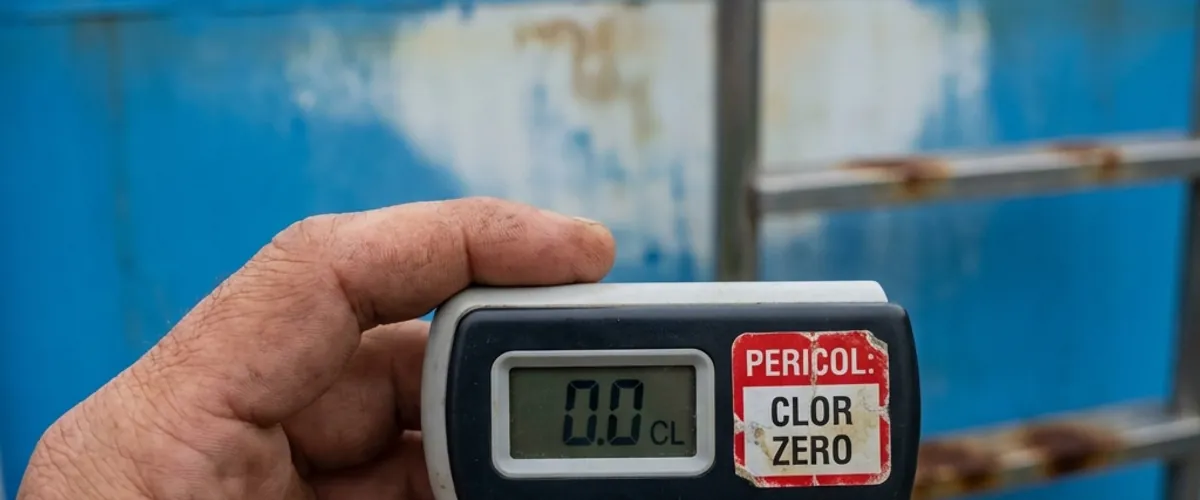
Ascorbic acid reacts instantly with hypochlorous acid (HOCl), turning it into inactive hydrochloric acid.
- Consequence: A single dose can completely wipe out the pool's sanitary protection.
- Monitoring error: Chlorine tests can return zero readings for up to 72 hours after treatment. During this time, a water treatment calculator is useless.
2. Corrosion and material degradation
Ascorbic acid causes a critical drop in pH and alkalinity. Direct contact with the granules can cause:
- Liner discolouration: Permanent white stains on the PVC membrane.
- Stainless steel corrosion: Accelerated oxidation of ladders and bolts, requiring professional maintenance and servicing.
If you still choose to use vitamin C in your pool
Although using vitamin C is a method not recommended by the specialists at Karma Pro Pools because of the risks described above, if you decide to apply it to remove isolated stains, it is essential to follow this strict protocol to minimise the collateral damage to the water and equipment:
- Emergency dosage: Approximately 90g per 10 m³ of water (doses are indicative and may vary depending on the pool's water parameters).
- Mandatory dissolving: Dissolve it beforehand in a bucket (never sprinkle the granules directly into the pool).
- Immediate rebalancing: Bring the pH back to 7.2 - 7.6 as soon as the water has cleared.
- Restoring the sanitiser: Resume chlorine dosing gradually to avoid re-oxidising the metals before the water has stabilised.
Professional alternatives: sequestering agents
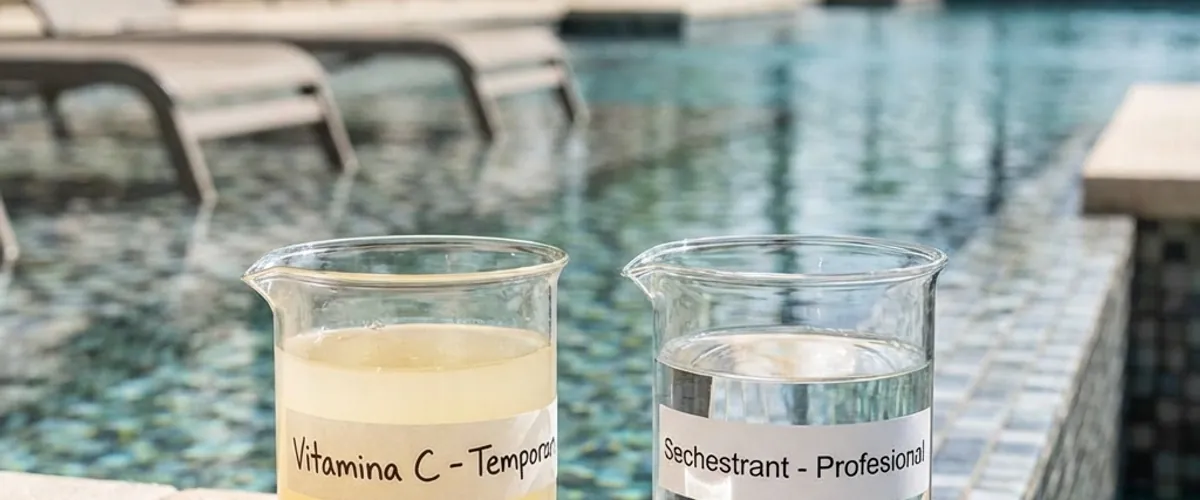
Unlike ascorbic acid, chelating agents (phosphonates) encapsulate metals at molecular level, preventing them from reacting with chlorine. They are chlorine-stable and do not cause corrosion, making them the only sustainable method of managing well water.
Case study: from crystal-clear water to draining the pool
A scenario commonly seen among pool owners illustrates the hidden risks of the "quick method":
- The intervention: The owner adds 2 kg of ascorbic acid to a 25 m³ pool with brownish water (oxidised iron).
- The "Wow" effect: In less than 15 minutes, the water becomes perfectly clear. Visually, the problem seems solved.
- The side effects: After 48 hours, the water turns milky. The owner adds shock chlorine, but tests consistently show 0 ppm chlorine. The residual vitamin C consumes any amount of sanitiser added.
- The progression: Without sanitiser, algae start to grow beneath the mask of clear water. The chemical imbalance (severe acid imbalance) becomes impossible to correct without enormous costs.
- The outcome: The only technical solution left was draining the water completely and restarting the treatment process using sequestering agents.
Conclusion: safety versus short-term looks
Vitamin C should be seen strictly as an emergency intervention for removing isolated metal deposits and never as a regular maintenance protocol. Although its ability to restore water clarity is remarkable, the associated risks, from chlorine neutralisation to the corrosion of stainless steel components, outweigh the short-term aesthetic benefits. For a healthy pool, using professional sequestering agents remains the only technical way to keep metals under control without compromising the biological purity of the water.
Frequently Asked Questions (FAQ)
What is the safest way to remove metals from a pool?
Why is vitamin C not recommended for maintenance?
What are the risks of "instant clearing" with vitamin C?
Can vitamin C void equipment warranties?
How can I prevent water discolouration right from filling?
Can sequestrants remove stains that have already formed on the liner?

Eng. Răzvan Pavel
Technical Activity Coordinator at Karma Pro Pools as Technical Manager. Graduate of University Politehnica of Bucharest in 2000. Exclusively active in the swimming pool industry since 2007, coordinating over 500 residential and public projects.
Want a pool like the ones in magazines?
Book a free consultation with our experts and let's turn your dream into reality.